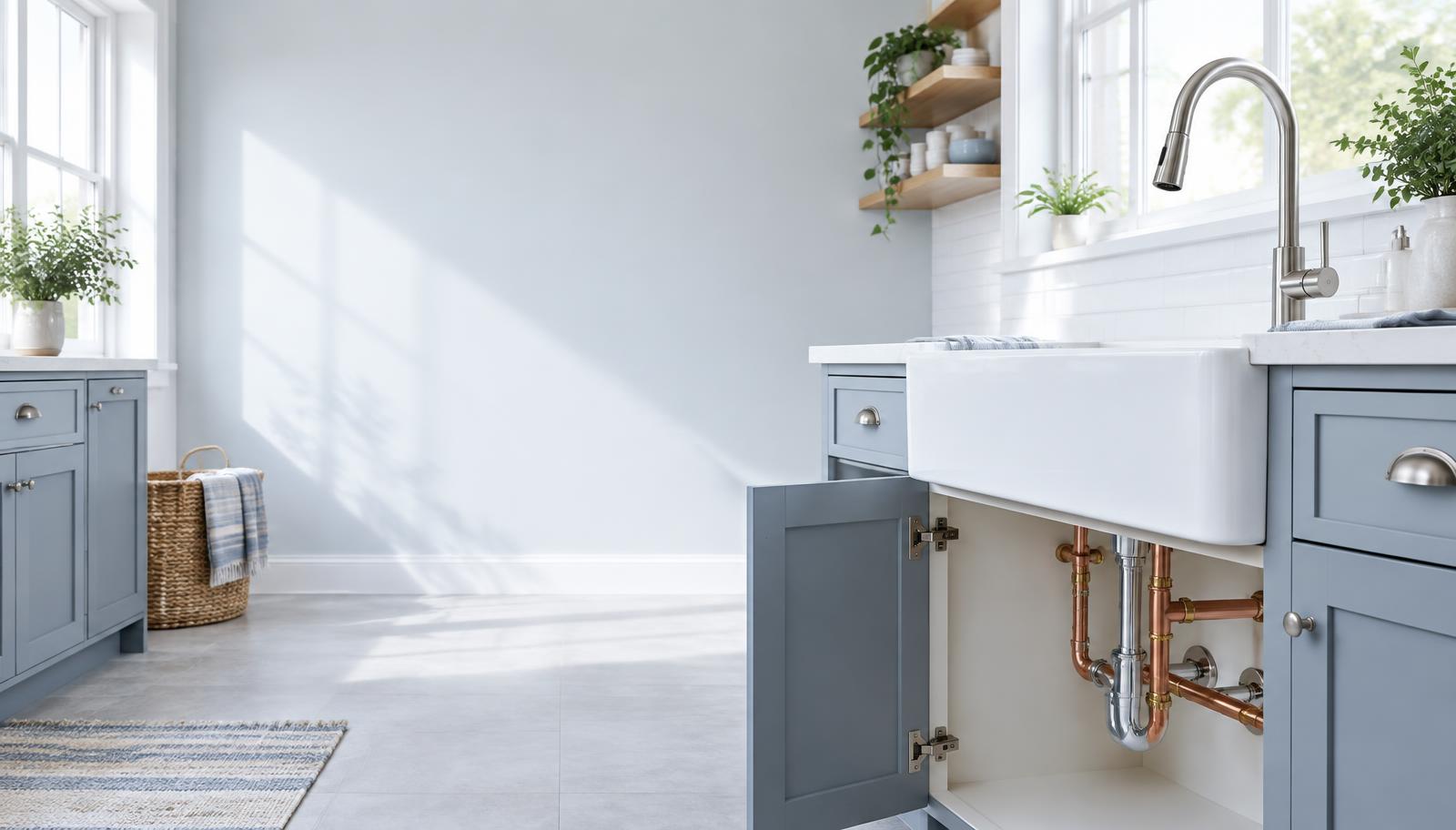
Bright kitchen sink with visible plumbing beneath the cabinet

Plumbing Help Center

Clear answers for your home's plumbing.

Troubleshoot common plumbing issues, learn maintenance basics, and know when to call a pro. Your home's pipes, demystified.

Essential DIY Maintenance

A few simple habits can help you spot trouble early and keep your plumbing in good shape.

Know Your Shutoff Valves

Check twice a year

  1. 1Locate the main water shutoff for your home
  2. 2Find the individual valves beneath sinks and behind toilets
  3. 3Gently test accessible valves to make sure they turn
  4. 4Label the main shutoff so others can find it quickly

Pro tip: If a valve is stuck or leaking, do not force it. Ask a plumber to replace it.

Keep Drains Clear

Monthly

  1. 1Remove hair and debris from shower strainers
  2. 2Scrape food scraps into the trash instead of the sink
  3. 3Run water after using the disposal, if you have one
  4. 4Clean removable sink stoppers when drainage slows

Pro tip: Never pour grease down a drain or mix chemical drain cleaners.

Watch for Hidden Leaks

Monthly

  1. 1Look under sinks and around the base of toilets
  2. 2Check for damp spots, stains, or musty smells
  3. 3Read your water meter when no water is running
  4. 4Compare the reading again after a period without use

Pro tip: Unexpected meter movement can suggest a leak, but confirm all appliances are off first.

Check Your Water Heater

Seasonally

  1. 1Look for moisture or corrosion around the tank
  2. 2Check for unusual noises or changes in hot water
  3. 3Keep the area around the heater clear
  4. 4Follow the manufacturer’s maintenance instructions

Pro tip: Never block or cap a water heater relief valve. Call a professional for leaks.

Seasonal Maintenance Checklist

Stay ahead of common plumbing problems with a practical season-by-season guide.

Spring

  • Inspect visible pipes after winter
  • Check outdoor faucets for leaks
  • Look beneath sinks for moisture
  • Clear debris from outdoor drains

Summer

  • Check hoses and outdoor spigots
  • Watch water use for unexplained spikes
  • Clean shower and sink strainers
  • Inspect toilet tanks for constant running

Fall

  • Disconnect garden hoses before freezing weather
  • Locate your main water shutoff
  • Inspect exposed pipes for insulation needs
  • Check the water heater for leaks

Winter

  • Keep vulnerable indoor areas heated
  • Open cabinets near exterior-wall pipes during cold snaps
  • Know how to shut water off quickly
  • Call a plumber if a pipe freezes or bursts

Some Jobs Need an Expert

DIY is useful for routine upkeep, but these signs call for a licensed plumbing professional or emergency help.

  • A burst pipe or water you cannot stop with a shutoff valve
  • Sewage backing up into a tub, shower, or floor drain
  • More than one drain clogging at the same time
  • Water collecting near electrical outlets or appliances
  • A water heater that is actively leaking
  • A sudden, unexplained drop in water pressure
  • Persistent damp walls, floors, or ceiling stains
  • A gas smell near a gas water heater. Leave and call your gas utility or emergency services

Frequently Asked Questions

Quick answers to the plumbing questions homeowners ask most often.

Prepare a Service Request

Gather the details a plumber will need before you reach out.

How urgent is this?

No information is sent or stored. For flooding, sewage backup, or a gas smell, seek local emergency help directly.